


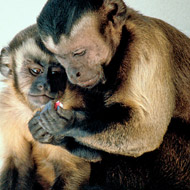
Born Free investigation raises concerns for the welfare of primates kept in pet shops.
The Born Free Foundation have released a shocking new report based on an investigation into the sale of primates in licensed pet shops in England.
The wildlife charity gathered information from Local Authorities under the Freedom of Information Act. They identified 21 pet shops in England licensed to sell primates.
Following investigation of these shops, the report reveals that pet shops are willing to sell single primates, without at least verifying with the potential buyer that the primate would be housed of others of the same species. Staff at one shop did not appear to know that a marmoset was a monkey.
The report also found that pet shops were inconsistent in their advice regarding where and how to keep primates - for example recommending that primates could be housed in a spare room or garage.
In addition, the report raises concerns for the welfare of some primates kept in pet shops, with monkeys in one shop on sale in cages traditionally used to keep parrots.
Born Free's programme manager for captive wild animals said: “Many people may be shocked to discover that it is still possible to walk into a high-street pet shop in England and buy a primate. Experts agree that primates are ill-suited for private ownership, where their behavioural, psychological, and environmental needs cannot be met, and consequently we would like to see an end to the keeping of primates as pets.”
In 2010, Defra published a Code of Practice on the private keeping of primates, as a guide to meeting the requirements of the Animal Welfare Act. Born Free believes that their investigation highlights several areas where purchasing primates from pet shops may not meet the guidelines of the Code of Practice. Born Free are now calling on the UK Government to close the loopholes that allow the sale of primates to the general public.
Adam Roberts, acting CEO of the Born Free Foundation added: "An increasing number of other countries have taken action on: for example, the keeping of primates as pets is banned in some EU countries such as the Netherlands and Hungary, while the United States Senate has started moving national legislation to end the pet primate trade”.
The report, Pet Shop Primates, is available to view at www.bornfree.org.uk/fileadmin/user_upload/files/zoo_check/reports/Pet-Shop-Primates.pdf
Photo (C) Frans de Waal


 Companies marketing medicines for small pets exempt from authorisation must submit their annual return to the Veterinary Medicines Directorate (VMD) by 30 November 2026.



