


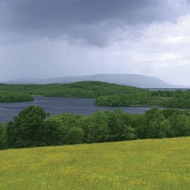
Potential for predator to have serious impact on ecology of lake
A new invasive species, a predator with the potential to have a serious impact on plankton composition, has been discovered in a lake in Northern Ireland for the first time.
The Bloody Red Shrimp (Hemimysis anomala) has been discovered in Upper Lough Erne, close to Eniskillen in County Fermanagh, according to researchers in the Agri-Food and Biosciences Institute (AFBI), Belfast. The discovery was made during a fish survey for the Northern Ireland Environment Agency, in conjunction with an AFBI led project focussing on the development of lake management tools.
The species was first discovered in Ireland in 2008 in the Shannon River catchment. Since then it has expanded its range into the Erne catchment where researchers on the project found several individual shrimp in the stomach contents of Perch.
Dr Robert Rosell, senior fish biologist at AFBI, said the Bloody Red Shrimp was distinctive from native shrimp species due to its orangey red transparent colouration and unlike similar native species it can be observed swarming in shaded areas during the day.
“This species is similar to the established non-native zebra mussel that originated in the Ponto-Caspian region of Eastern Europe and has gradually spread westward. Once introduced into the river system here it has expanded its range probably as a result of leisure craft moving between river catchments via the Shannon-Erne canal.”
Project leader Dr Yvonne McElarney explains that, as with other invasive species, the main concern about the Bloody Red Shrimp is the potential adverse impact on the ecology of a lake.
“This species is known as a voracious predator that has the potential to have a serious impact on plankton composition. Findings such as this underpin the importance that the development of lake management tools project has on understanding the lake ecosystem and the impact of change in lakes”.
Stephen Foster from the Northern Ireland Environment Agency, that works in partnership with agencies north and south to implement management plans to reduce the impact of invasive alien species on native biodiversity, said; “Invasive alien species are widely recognised as one of the greatest threats to our native biodiversity. Once an invasive species has established within a habitat its spread can be rapid, out-competing native species.
"It is extremely important that we all do that we can to minimise the risk of spreading or introducing non-native invasive species.”
Image (c) Jon Sullivan


 Companies marketing medicines for small pets exempt from authorisation must submit their annual return to the Veterinary Medicines Directorate (VMD) by 30 November 2026.



