


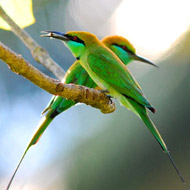
Pair of rare birds nest on the south of the island
A pair of rare bee-eater birds have chosen the Isle of Wight as their breeding home - thought to be only the third time the species had bred successfully in the UK in the past century.
A small valley in the sandy hills of the Wycombe Estate, in the south of the island, was chosen by the colourful pair, who would normally nest in Southern Europe - possibly because the soft ground, a nearby stream and a bountiful supply of insects provided the ideal conditions for their nest burrow, which could be up to three metres long.
It's more than a decade since a pair successfully fledged two young from a nest in a quarry in County Durham in 2002 and more than half-a-century since two pairs of bee-eaters raised seven young between them in Sussex in 1955 - and the National Trust, who oversee the Wydcombe site, are working with the RSPB and the Isle of Wight Ornithological Group to watch the nesting site around the clock to keep the birds safe.
Visitors can, however, still see this rare nesting event from a designated public viewing point overlooking the birds' favourite feeding area. The adult birds have been spotted delivering food into the nest, suggesting the eggs have already hatched but the chicks won't leave the underground nest site for a couple of weeks. Bee-eaters traditionally lay clutches of four to nine eggs.
National Trust nature and wildlife expert Matthew Oates says the birds' arrival is causing quite a stir.
"The bee-eater is arguably the most stunning bird on the British list; it looks tropical. We're pulling out all the stops to help the chicks safely fledge whilst keeping the public up-to-date with their progress."
Hot temperatures since the spring have helped attract above average numbers of bee-eaters to the UK this year, with ten seen along the south coast since May.
Image courtesy of Sunil Elias


 Companies marketing medicines for small pets exempt from authorisation must submit their annual return to the Veterinary Medicines Directorate (VMD) by 30 November 2026.



