


Technology catches up with hummingbirds
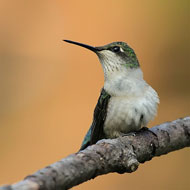
Hummingbirds are some of the most efficient fliers in the world.
Top of the range micro-helicopters can now fly as efficiently as some species of hummingbird, scientists say. Despite this, one species is still racing ahead of technology.
The wings of the Anna's hummingbird, a common species throughout the west coast, are around 27 per cent more efficient than blades from a ProxDynamics Black Hornet micro-helicopter.
About the size of a small hummingbird, the micro-copter is the most sophisticated model currently available and is used by the British Army in Afghanistan.
Researchers from Stanford University in California say their findings could pave the way for improved robotic vehicles.
After 42 million years of natural selection, the hummingbird is one of the most efficient fliers, particularly when it comes to hovering.
While the Black Hornet is still being out-flown by Anna's hummingbird, the research found it can keep pace with other species.
Wings from 12 different species of hummingbird – sourced from a museum collection – were spun using apparatus designed for testing the aerodynamics of helicopter blades. Researchers found the engineered blades could keep pace with middle-of-the-pack hummingbird wings.
David Lentink from Stanford, who led the research, said: “The technology is at the level of an average Joe hummingbird. A helicopter is really the most efficient hovering device that we can build. The best hummingbirds are still better, but I think it's amazing that we're getting closer.
“It's not easy to match their performance, but if we build better wings with better shapes, we might approximate hummingbirds."
Based on measurements taken of Anna's hummingbirds, Lentink said the rotor power of micro-copters could be improved by up to 27 per cent.
However, Professor Lentink says scientists still do not know how hummingbirds maintain their flight in strong winds, how they navigate through branches or how they speedily change direction.
Huge strides could be made through further study of wing aspect ratios – the ratio of wing length to wing width – he says.
“Understanding and replicating these abilities and characteristics could be a boon for robotics and will be the focus of future experiments.”


 Companies marketing medicines for small pets exempt from authorisation must submit their annual return to the Veterinary Medicines Directorate (VMD) by 30 November 2026.



