


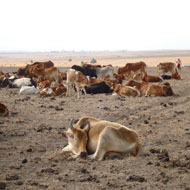
Research alliance aims to improve livestock health in developing countries
Improving the health and productivity of farmed animals in developing countries is the focus of a new alliance between researchers in Scotland and Africa.
The University of Edinburgh and Scotland's Rural College have teamed up with the International Livestock Research Institute (ILRI) in Kenya to launch the initiative that aims to find ways to identify the best animals to breed from to improve the quality of livestock in tropical climates and increase their economic value.
The new Centre for Tropical Livestock Genetics and Health, which will have bases in Scotland and Kenya, will initially focus on the use of genetic information to tackle the challenges faced by farmers in developing nations.
Joint teams from Scotland and Africa will explore the genes that make some animals more resistant to diseases than others, as well as those that enable certain breeds to thrive in warmer, arid conditions.
Professor David Hume, director of The Roslin Institute, part of the Scottish team at the University of Edinburgh's Easter Bush Campus base, said: “With the threat of rising temperatures due to climate change, the need for affordable techniques to improve farming and food security in warmer climates is becoming a global challenge. We are delighted to announce this new partnership to address the issue, which builds on existing successful collaborations between our three organisations.”
The Africa site will be at ILRI in Nairobi, Kenya, and will see scientists from both ILRI’s new global livestock genetics program (LiveGene) and the Biosciences eastern and central Africa (BecA)-ILRI Hub and their partners in Africa working together on the animal research project.
Dr Jimmy Smith, director general of ILRI said: “ILRI is delighted to be forming this new alliance with the eminent University of Edinburgh’s Roslin Institute and Scotland’s Rural College. Modern genetic approaches offer new opportunities to identify livestock suited to the diverse and demanding conditions under which African smallholder farmers work. This new alliance brings together a unique mix of skills to address these exciting and important challenges.”
Photo courtesy of ILRI.


 Companies marketing medicines for small pets exempt from authorisation must submit their annual return to the Veterinary Medicines Directorate (VMD) by 30 November 2026.



