


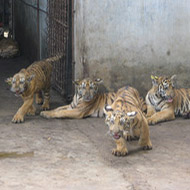
Born Free release shocking new report which shines the spotlight on tiger farming
The Born Free Foundation have released a damning report which brings attention to the little known industry of tiger farming, as the species heads towards extinction in the wild.
The report, entitled Caged Assets: Tiger Farming and Trade, urges all countries with tiger breeding facilities to phase out tiger farms, destroy stockpiled tiger parts and put in place measures to address the use of captive-bred tigers in trade.
Tigers in these farms can be kept in cramped and unnatural conditions, with rows of cages filled with pacing, malnourished tigers. Born Free say these establishments are often open to the public, with the animals used for in entertainment shows.
Between 40 and 50 tigers remain in the wild in China, but there are more than 5,000 in captive breeding facilities. The facilities can act as a source for numerous tiger products, such as tiger skins - which are used for luxury home decor - and tiger bone wine, made by suspending tiger carcasses in vats of wine. The latter is a prestigious item that is used to show wealth and status.
Will Travers OBE, president of Born Free Foundation, said: "The tiger farming industry has absolutely no value for conservation - these tigers are often in a pitiful state, both in terms of their genetics and their welfare. So the question begs to be asked: why are these tigers being bred, if not for trade - trade now and trade for an anticipated future when wild tigers are even rarer and the monetary value of tiger products even greater. Clearly, these tiger farms are commercial concerns and their owners are banking on extinction."
Wild tiger populations have dropped to as few as 3,000 individuals, due to poaching, human-tiger conflict and the illegal trade in tiger parts and products.
Mr Travers concluded: “The many threats faced by tigers today cannot be underestimated and how we respond to them now is critical to the tiger’s future. Our children’s children will judge us on what we do now and we must ensure that tiger farming becomes almost a figment of their imagination, an aberration that was firmly consigned to history and will never again be repeated.”
To read the full report click here.
Photo credit: Xiongsen Bear and Tiger Mountain Village 2009 (c) Animals Asia Foundation.2


 Companies marketing medicines for small pets exempt from authorisation must submit their annual return to the Veterinary Medicines Directorate (VMD) by 30 November 2026.



