


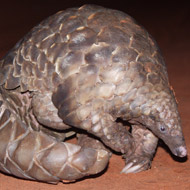
"All eight species of pangolin are now listed as threatened with extinction"
According to the latest update of the IUCN Red List of Threatened Species, the pangolin is literally being eaten out of existence.
Pangolins, often called "scaly anteaters", are covered in tough overlapping scales. These scales protect against natural predators, but sadly offer no defence against poachers.
Experts at the Zoological Society of London (ZSL) warn that pangolins are now the most illegally traded mammal in the world. More than 1 million individuals are thought to have been taken from the wild in the past 10 years.
ZSL says the illegal trade is thriving in spite of a commercial trade ban for wild-caught pangolin in Asia: "Consumers are willing to pay increasingly high prices for their meat, which is being plated up at banquets across the East as a luxury food. In traditional Chinese medicine, pangolin scales are also believed to treat a wide variety of conditions including psoriasis and poor circulation."
With the illegal trade having reached an epic scale, Chinese and Sunda pangolins are now classified as critically endangered. As populations of the four Asian pangolin species fall, ZSL says traders are turning to Africa to meet the growing demand.
Professor Jonathan Baille, co-chair of the IUCN SSC Pangolin Specialist Group, comments: "All eight pangolin species are now listed as threatened with extinction, largely because they are being illegally traded to China and Viet Nam.
"In the 21st century we really should not be eating species to extinction - there is simply no excuse for allowing this illegal trade to continue."
The IUCN SSC Pangolin Specialist Group is today launching a conservation action plan. It outlines the steps that need to be taken to crack down on the illegal trade and ensure a future for pangolins in Asia and Africa.
The new action plan, "scaling up pangolin conservation", focuses on strengthening legislation, protecting pangolin strongholds in Asia and Africa, helping local communities move away from poaching and understanding and reducing demand from consumers.


 Companies marketing medicines for small pets exempt from authorisation must submit their annual return to the Veterinary Medicines Directorate (VMD) by 30 November 2026.



