


Dogs get the green eyed monster
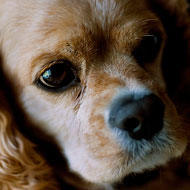
Dogs were more likely to show jealous behaviours when their owner was affectionate towards an animated dog.
A new study suggests that humans are not the only ones to experience the green eyed monster. Dogs too exhibit jealous behaviours when their owners show affection to a rival, scientists say.
Recent research published in PLOS ONE found that dogs were more likely to show snapping or pushing behaviours when their owner was affectionate toward a “rival”.
Emotion researchers have long debated whether jealousy requires complex cognition. Some scientists believe it is a social construct – not hard-wired in the same way as fear or anger.
In a bid to find out if jealousy is a purely human emotion, researchers from the University of California, San Diego, adapted a test used on six-month-old human children.
Working with 36 dogs in their own homes, researchers recorded owners ignoring their dogs in favour of a stuffed, animated dog that barked, whined and wagged its tail.
Owners were asked to treat the animated dog as though it were a real dog – stroking them and speaking to them sweetly.
In another scenario, owners were asked to behave in exactly the same manner with a Jack-o-lantern pail. A final group of owners were asked to read aloud from a pop-up book that played melodies.
Researchers found dogs were significantly more likely to push or touch their owner when they were interacting with the stuffed dog than the Jack-o-lantern pail. Fewer than a quarter (22 per cent), however, reacted in this way when the owner was reading the book.
Around 30 per cent of dogs tried to get between their owner and the fake dog, and a quarter of them even snapped at the “other dog”, whereas only one dog snapped at the pail and the book.
“Our study suggests not only that dogs do engage in what appear to be jealous behaviours but also that they were seeking to break up the connection between the owner and a seeming rival,” said psychology professor Christine Harris from UC San Diego.
It is important to understand jealousy as it is an emotion with far-reaching social and psychological consequences, researchers say.
“Many people have assumed that jealousy is a social construction of human beings – or that it's an emotion specifically tied to sexual and romantic relationships,” explained Prof Harris.
“Our results challenge these ideas, showing that animals display strong distress whenever a rival usurps a loved one's affections.”


 Eligible members of BEVA will be able to vote for their Council team until Monday, 17 August 2026. Members will have received an election email on 17 July.



