


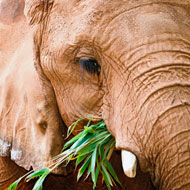
Body fat study could pave the way for research to ensure the African elephant's survival
New research into the body fat of the African elephant is laying the groundwork for future studies to ensure the survival of the species.
A research team from The University of Nottingham School of Veterinary Medicine and Science has carried out the first molecular characterisation of the elephant’s adipose tissue - body fat - that will form the building blocks for further studies to help scientists start to identify important dietary components for health and reproduction to enable better management of the animals in captivity and in the wild.
The population of captive elephants, both Asian and African, in Europe and North America is not self-sustaining, largely due to poor fertility, resulting in a fewer baby elephants being born. It is acknowledged that if a solution for these reproductive difficulties cannot be found quickly, captive elephants will face demographic extinction in North American zoos within the next 50 years.
The research, Molecular Characterization of Adipose Tissue in the African Elephant, led by Dr Lisa Yon with colleagues Dr Nigel Mongan, Dr Richard Emes and Dr Alison Mostyn, has been published in the open access journal PLOS ONE.
Using expertise in molecular biology and bioinformatics and with access to samples from the African elephant, researchers were able to explore some important basic biological questions to achieve a better understanding of elephants. Leptin — a hormone made by fat cells to regulate the amount of fat stored in the body – is a crucial molecular link between nutritional status, amount of adipose tissue and fertility in many species and this research has shown that it has a similar function in the African elephant.
Dr Yon said: "This research provides important information on the structure and function of adipose tissue in the African elephant, highlighting the crucial genes and nutrients present during different times of life — particularly reproduction and lactation. The information we gained can help us to know how to better provide for elephants’ dietary needs, and what possible impact this may have on their reproductive success."
This study is seen as an important step to help maintain a healthy, reproductively viable captive population.
Click here to read the research in PLOS ONE.


 Companies marketing medicines for small pets exempt from authorisation must submit their annual return to the Veterinary Medicines Directorate (VMD) by 30 November 2026.



