


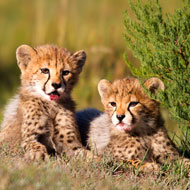
Born Free Foundation calls on CITES parties to tackle smuggling
The wildlife conservation charity Born Free Foundation have called on international leaders to act swiftly to save the cheetah from threats facing the species, including smuggling of the animals for the exotic pet trade.
The charity will have a delegation in Geneva in Switzerland next week as the Convention on International Trade in Endangered Species (CITES) Standing Committee meets to discuss the illegal trade in cheetahs, as the wild population plummets to fewer than 10,000.
Cheetahs may be the fastest land animals, but they are no match for the ruthless criminals who capture them from the wild and smuggle them to the Middle East where they are highly prized as pets.
Adam Roberts, acting CEO of Born Free Foundation and CEO of Born Free USA, has issued an urgent call for the international community to take action to stop the trade and protect vulnerable cheetah populations.
"Born Free regularly encounters first-hand the consequences of this dire trade. Ensessakoteh, our Wildlife Rescue, Conservation and Education Centre in Ethiopia, is currently home to a number of rescued cheetahs and other wild animals. But these are the lucky ones. Many other unlucky cubs either die in transit to the Middle East, or face a lifetime as pets, with a chain around their necks.
“The fact of the matter is we have no idea how many cheetahs are being illegally captured each year, but there is no doubt that the consequences are having a devastating impact on wild cheetah populations. Decisive action must be taken before it is too late."
A recent study commissioned by CITES uncovered a thriving trade in live cheetah cubs, illegally exported from East Africa via Somaliland and Somalia, which are then imported to the Arabian Peninsula. Most of these cubs do not make it – with a reported mortality rate of 70 per cent recorded from confiscations in Somalia and Ethiopia.
Born Free will be calling on CITES Parties in Geneva to combat illegal trade in live cheetahs, through enhanced enforcement at borders and the urgent development of improved legislative and regulatory controls.


 Companies marketing medicines for small pets exempt from authorisation must submit their annual return to the Veterinary Medicines Directorate (VMD) by 30 November 2026.



