


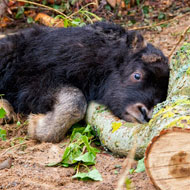
Species notoriously difficult to breed and raise
The birth of a muskox calf at Highland Wildlife Park has given keepers a reason to celebrate. The species is notoriously difficult to breed due to high neonatal mortality rates.
However, keepers are not out of the woods yet as muskox calves have very weak immune systems, putting them at risk of disease and infection. The inherent aggressiveness of adults is a further complication.
The last muskox calf to be successfully raised into adulthood was born in 1992.
Last year the park lost a five-month-old calf named Belle due to an injury inflicted by one of her parents.
Highland Wildlife Park has altered its husbandry protocol and is working to ensure the survival of this year's calf.
Douglas Richardson, head of living collections, said the new calf is growing well under the careful eye of his keepers. He and his mother will remain off show for some time yet.
As he continues to grow, the calf and his mother will be gradually introduced to one of their large grassy enclosures and later to his father.
The muskox was hunted to near extinction for its fur and meat, but thanks to conservation regulation, reintroductions and natural recolonisation, the species is now classified as being of "least concern" on the IUCN red list of endangered species.
Image credit Alex Riddell.


 Companies marketing medicines for small pets exempt from authorisation must submit their annual return to the Veterinary Medicines Directorate (VMD) by 30 November 2026.



