


TB movement restrictions stepped up
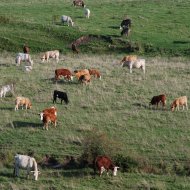
TB partial de-restrictions will no longer be permitted from October 2014.
Defra has announced changes to TB cattle movement controls due to concerns over the spread of bovine TB.
From October 1, 2014, movement restrictions will apply to all cattle on a holding for the duration of the TB breakdown.
Herds are placed under movement restrictions and lose their officially TB free (OTF) status when animals test positive on-farm, TB lesions are identified at post-mortem or when TB herd testing becomes overdue.
Cattle from TB restricted herds that test negative for the disease can only be moved directly to slaughter, to other restricted herds and to AHVLA approved finishing units (AFUs).
However, under the current system, some holdings are allowed partial de-restrictions.This means separate groups of cattle can be tested clear before the rest of the herd. Cattle that test negative in the de-restricted parts can be freely traded.
From October this year, partial de-restrictions will no longer be permitted and movement restrictions will apply to all cattle from the holding, until all animals have achieved OTF status.
According to Defra, there is evidence to suggest partially de-restricted holdings have a disproportionate number of further TB breakdowns.
It is also difficult to ensure that only negative-testing cattle are released from restrictions and that cattle are not moved between the separate parts of the holding.
Negative-testing cattle can still be moved to AFUs, sold direct to the slaughterhouse or moved to another TB-restricted holding (subject to a veterinary risk assessment).
No new partial de-restrictions will be considered between now and September 30, 2014.
For further information and guidance, see Defra's TB information note.


 Companies marketing medicines for small pets exempt from authorisation must submit their annual return to the Veterinary Medicines Directorate (VMD) by 30 November 2026.



