


Fossilised tooth of fearsome marine predator discovered
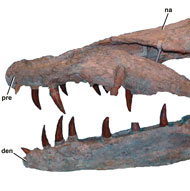
Dakosaurus maximus skull
Palaeontologists have verified that a fossilised tooth, recently discovered on Chesil Beach in Dorset, belonged to a prehistoric relative of modern crocodiles.
The tooth is the largest fossil of its kind to have been found in the UK, measuring 5.5cm long. It belonged to Dakosaurus maximus, a large marine predator from the Thalattosuchians family, which also includes today’s crocodiles.
Growing up to 4.5 metres long, Dakosaurus maximus swam in the shallow seas that covered Europe 152 million years ago. Scientists can deduct from the shape of its skull and teeth that the predator probably fed on a prey similar to that of modern day killer whales, using its short, broad jaws to swallow large fish whole or to take chunks out of larger prey.
The fossil was identified by researchers and curators, after it was bought in an online auction by a fossil collector over a year ago. It has now been placed in the fossil collection of the Natural History Museum, and the research has been published in the scientific journal Historical Biology.
Dr Mark Young, of the University of Edinburgh's School of Biological Sciences, said: "Given its size, Dakosaurus had very large teeth. However, it wasn't the top marine predator of its time, and would have swum alongside other larger marine reptiles, making the shallow seas of the Late Jurassic period exceptionally dangerous."
Image courtesy of the University of Edinburgh


 Companies marketing medicines for small pets exempt from authorisation must submit their annual return to the Veterinary Medicines Directorate (VMD) by 30 November 2026.



