


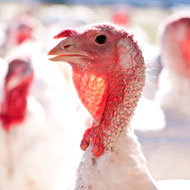
It is important to stress that 80 per cent of halal slaughter in the UK is pre-stunned, BVA says
Reports in national newspapers over the past few days have highlighted the debate on humane slaughter and halal and kosher meat.
BVA recently launched a government e-petition calling for an end to slaughter without pre-stunning to render the animal insensible to pain.
The association stresses its campaign is not about religion, but about animal welfare.
European and UK law requires animals to be pre-stunned before slaughter, but the legislation allows non-stun slaughter in certain religious communities - Dhabihah for halal meat and Shechita for kosher food.
Back in March, BVA president-elect John Blackwell spoke out about halal slaughter on BBC Radio Four and in the Times newspaper. He said religious customs for the production of halal and kosher meat should be adapted to prevent animal suffering.
Recent reports in the national press have highlighted that all chicken used in Pizza Express dishes is halal, a fact which is stated on the restaurant chain's website, but not on menus. The reports have prompted a backlash on Twitter.
It is noted on the Pizza Express website: "All our chicken is halal approved but it is important to note that all birds are stunned before being slaughtered."
The pizza chain has responded to criticism by saying: "It is no secret that all the chicken used in our dishes is halal slaughtered. Our teams in restaurants have and always will provide this information".
It was reported in the Daily Mail this morning that more than 70 per cent of New Zealand lamb is halal, with over three quarters killed in pre-stun slaughterhouses.
The newspaper claims a number of supermarket chains have confirmed they stock the imported meat, with a mixture of labelled and non-labelled products.
While non-stun slaughter is permitted by law, the BVA is calling for better labelling of food products so consumers can make an informed choice about the food they purchase.
BVA president Robin Hargreaves says the organisation has been "overwhelmed" with support for its campaign and hopes to reach the 100,000 petition signatures needed for the issue to be discussed in the House of Commons.
View the petition online: http://epetitions.direct.gov.uk/petitions/64331


 Veterinary practices are being urged to help owners safely dispose of any unused and expired pet medicines - not just antibiotics - during November's Animal Medicines Amnesty.




