


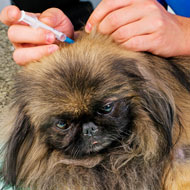
NOAH statement aims to clear up discrepancies about canine vaccination
The National Office of Animal Health (NOAH) has issued a statement for veterinary surgeons on canine vaccination.
It discusses apparent discrepancies between global vaccination guidelines and advice contained within vaccine Summary of Product Characteristics (SPCs) and data sheets in the UK.
Following a recent publication from The World Small Animal Veterinary Association (WSAVA), entitled Vaccination Guidelines for New Puppy Owners, NOAH has received multiple queries from practitioners, seeking clarification regarding the messages it contains.
The statement clarifies that the publication is written from a global perspective. As many countries do not have the developed and educated companion animal market found in the UK, the available vaccines and their constituents and licensed claims are not universal across the globe.
Donal Murphy, NOAH technical executive and veterinary surgeon, explains: "NOAH members have received queries from practitioners seeking clarification when guidance written from a global perspective appears to differ from specific manufacturers' instructions, as set out in vaccine SPCs and data sheets in the UK.
"While there are some differences, we believe the profession within the UK has adopted many of the principles of the WSAVA guidance for some considerable time, such as annual health checks and determining individual requirements in consultation with the owner."
NOAH welcomes any guidance assisting the veterinary profession in their determination of vaccine protocols, and helping to educate the public. Clarification is required on the routine use of non-core vaccines (particularly leptospirosis and kennel cough) and the role of serology testing to determine vaccination requirements and vaccine safety.
Mr Murphy says: "In the light of increased movement of pets from mainland Europe and beyond, the continued wide distribution of canine parvovirus and indeed the re-emergence of confirmed cases of canine distemper in a number of locations in the UK, the threat of infectious diseases to our pets is ever present and demands that a high level of vaccinal immunity is maintained across the country.
"It would be unfortunate if in seeking to provide 'best practice' advice on the use of vaccines, expert guidance was to lose sight of the need to maintain the confidence of both the pet owning public and indeed the veterinary profession itself in the continued value of the use of vaccines to keep significant infectious disease threats at bay."
NOAH believes the comment by the Veterinary Medicines Dictorate (VMD), responsible for the authorisation of veterinary medicines in the UK, sums up the value of vaccination to the health of our pets: '…the benefits of vaccination are considered significantly greater than the risks of infection by the ever present canine infectious diseases in the UK.'
Click here to view the statement.


 Eligible members of BEVA will be able to vote for their Council team until Monday, 17 August 2026. Members will have received an election email on 17 July.



