


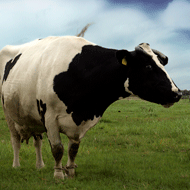
New Government figures puncture welfare myths
Official new figures from the Government state that animals in British slaughterhouses are correctly stunned before slaughter in more than 99 per cent of cases.
The BVA says this deflates the myth that large numbers of animals are suffering welfare issues, an argument used by those who support non-stun slaughter.
For some time the organisation has been calling for a ban on the practice of slaughter without pre-stunning.
BVA president Robin Hargreaves says: "As veterinary surgeons our number one priority is animal welfare and that is why we continue to call for an end to non-stun slaughter which unnecessarily compromises welfare at the time of slaughter."
According to BVA, it has been suggested by those who oppose this view, that mis-stunning occurs frequently, causing a greater welfare issue that non-stun slaughter. Figures of nine to 31 per cent of slaughtered animals have been quoted from a 2004 Europe-wide Efsa report.
Mr Hargreaves says the new figures show that mis-stunning is "extremely rare" in British abattoirs.
According to the new figures, in 2013 there were only nine reports of mis-stunning incidents in cattle and three reports in sheep. This represents 0.0004 per cent of slaughtered cattle and 0.00002 percent of sheep. Reports of poultry mis-stunning totalled 13.
The reports were made by official veterinarians working in abattoirs and collated by the Food Standards Agency on behalf of Defra.
Mr Hargreaves says: "Of course any incident of mis-stunning must be acted upon and the public should be reassured that there is legislation in place to ensure that mis-stunned animals are immediately re-stunned to render them unconscious."


 Companies marketing medicines for small pets exempt from authorisation must submit their annual return to the Veterinary Medicines Directorate (VMD) by 30 November 2026.



