


Dogs Trust raises concerns over research validity
Tail docking could soon be allowed on certain dog breeds in Scotland after a study found that it could reduce the risk of injury.
In a move that has been criticised by the Dogs Trust, the Scottish Government has said it is considering lifting an existing ban to allow docking for working breeds.
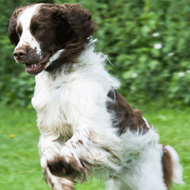
It follows the publication of research by the University of Glasgow, commissioned by the Scottish Government, which found more than half of working undocked spaniels, had experienced a tail injury within the past year.
Of a total of 2860 working dogs included in the survey of 1,000 owners, 13.5 per cent had received tail injuries in the 2010/11 shooting season. Undocked spaniels were at the greatest risk with 56.6 per cent injured, while hunt point retrievers were not far behind with 38.5 per cent sustaining tail injuries.
Researchers suggested that docking at a young age could reduce the risk of injury.
Rural Affairs Secretary Richard Lochhead said: “It is clear to me that animal welfare is an extremely important issue and one which is close to many people’s hearts.
"For that reason, any decision taken by the Scottish Government fully considers the welfare of each and every animal affected. In some cases, as in this one, there is no clear, straightforward answer and a balance needs to be struck.
“This research that we have funded has provided a sound basis for us to discuss with concerned parties where that balance point should be between protecting the welfare of puppies and protecting the welfare of adult working dogs, and whether further action is justified to protect working dogs from injury.
“I must stress that I have as yet taken no firm stance on this; we need to gain a clearer understanding of the views of interested parties in Scotland before any decision is made.
“I have therefore invited key interested parties to consider the findings of this research and to comment on whether they merit further consideration of a possible exemption to the ban on tail docking for specific working dogs.”
Key organisations have been asked to feedback on the findings by May 23, 2014.
The Scottish Gamekeepers’ Association backs the ban being lifted.
But the Dogs Trust questioned whether the reduction of a injury risk justified the pain involved with tail docking.
It said the university's research team had advertised the surrey to more than 17,500 owners of working dogs, but received just 1,005 replies. This, the Dogs Trust said, may mean the risk of injury has been overestimated while those that did respond gave anecdotal accounts rather than details of verifiable injuries.
The survey had suggested that anywhere between 18 and 108 working puppies would need to be docked to prevent a single veterinary treatment taking place.
But a second piece of research by the university, which consulted with just eight veterinary practices in Scotland, suggested 232 working breed puppies would need to be docked to prevent a single veterinary treatment.
"Based on these points and others, Dogs Trust has grave reservations regarding the validity of the research, which we do not believe is representative or forms a sufficient evidence - base on which any possible changes to legislation should be formed," said a spokesman.


 Eligible members of BEVA will be able to vote for their Council team until Monday, 17 August 2026. Members will have received an election email on 17 July.



