


Testosterone lowers chance of survival in deer
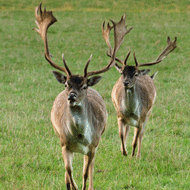
Scientists say their research sheds light on how testosterone affects the health and survival of young animals.
A study of wild deer has found that high levels of testosterone could be linked to lower survival rates in calves.
Scientists from the Universities of Edinburgh and Cambridge said first-born male deer with relatively high levels of the hormone are less likely to survive their first year.
High levels of testosterone is linked with lowered immunity to infection and a shortened lifespan. Coupled with a new mother's inexperience, scientists say this lowers the chance of survival.
The research team measured testosterone in blood samples from 850 newborn wild red deer on the Isle of Rum from 1996 and 2012.
Findings published in Functional Ecology suggest testosterone levels in newborn deer are linked to the mother's condition. Researchers say male deer born after an older brother had lower levels of testosterone than the other calves.
Experts are unsure as to why this may be, but suggest it could be that mothers are weakened by having male calves, as they are heavier and suckle longer than females.
Leading the study, Alyson Pavitt from the University of Edinburgh's School of Biological Sciences, said: "For adult animals such as red deer, high testosterone can increase strength and dominance but reduces immunity and longevity.
"This latest finding suggests that individuals born with high testosterone may be subject to similar costs."


 Companies marketing medicines for small pets exempt from authorisation must submit their annual return to the Veterinary Medicines Directorate (VMD) by 30 November 2026.



