


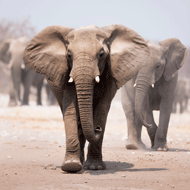
Age, gender and language can be recognised to calculate dangers
Elephants can identify humans that pose a threat to them by distinguishing between the languages of different ethic groups, as well as recognising age and gender.
This is according to new research by the University of Sussex, where sound recordings were played to family groups of African elephants in Amboseli National Park, Kenya.
The elephant groups were played recordings of the voices of two different ethnic groups familiar to them - the Maasai, with whom they periodically come into conflict over water access and grazing for cattle, and the Kamba, who pose less of a threat.
Researchers say the elephants were more likely to display defensive behaviour - such as investigative smelling or bunching together - when they heard male Maasai voices.
The research also suggests the elephants could distinguish gender and age, as they were less defensive in response to the voices of Maasai women and boys, who would be unlikely to cause harm, than Maasai men.
Co-author Dr Graeme Shannon said: "The ability to distinguish between Maasai and Kamba men delivering the same phrase in their own language suggests that elephants can discriminate between different languages.
"This apparently quite sophisticated skill would have to be learned through development or through younger family members following the lead of the herd’s matriarch and other older females."
Similarly, previous studies have shown family groups of African elephants display greater fear when presented with the scent of garments worn by Maasai men than Kamba men. The animals also show aggression in response to the red clothes typically worn by the Maasai.
Mammal communication expert and lead author of the study, Professor Karen McComb, explained: "Recognising predators and judging the level of threat they pose is a crucial skill for many wild animals.
"Human predators present a particularly interesting challenge, as different groups of humans can represent dramatically different levels of danger to animals living around them."
The research was published in the Proceedings of the National Academy of Sciences on March 10.


 Companies marketing medicines for small pets exempt from authorisation must submit their annual return to the Veterinary Medicines Directorate (VMD) by 30 November 2026.



