


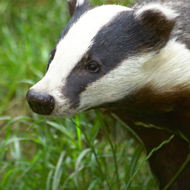
Scientists hopes to establish extent to which badgers are spreading disease
Carcases of badgers killed by cars, vans and lorries are being tested for bovine tuberculosis as part of a study to establish the extent they play in the spread of the disease to cattle.
In a move backed by the National Farmers Union, The Animal Heath and Veterinary Laboratories Agency, and the Cheshire Wildlife Trust, scientists at the University of Liverpool are using dead badgers to validate the presence or absence of the disease, its geographic distribution and the genotypes that could enable both larger studies and TB control measures.
A team based at the University’s Leahurst veterinary campus will receive badgers killed in road collisions in Cheshire.
They say that while it is widely accepted that bTB can be transmitted between badgers and cattle, the extent to which badgers play a role in the spread of the disease and where it is within Cheshire’s badger population remains largely unknown.
The study comes at the same time that the Government is assessing the success of a badger culling pilot in south west England, and wildlife charities are expanding badger vaccination trials.
Cheshire has experienced a year-on-year rise of bTB cases in livestock herds. While the disease has established a strong presence in the south of the county, the region as a whole is considered to be on the "edge" of bTB's progression northwards.
Malcolm Bennett, professor of epidemiology at the University’s Institute of Infection and Global Health, said: “Bovine TB is a serious disease and how control it is both a complex and controversial issue.
"Any solution should be based on evidence, including some understanding on whether or not, and if so where, TB is present in cattle and badgers.
“Through testing, we already know where TB is in cattle in Cheshire, and this survey aims to give us a better idea of where it is in badgers in order to get some evidence that can be used in rational debate.”
Richard Gardner, leading Cheshire Wildlife Trust’s badger vaccination scheme added: “We know that badgers aren’t solely responsible for the spread of TB in cattle, so any research that allows us to establish the local level of the role they do play, can help us direct how we approach tackling the problem here in the north west.
"This is especially useful while they remain at the heart of the Government’s current strategy for tackling bTB.
“Our overall aim, like many of the landowners we work with, is to have a region that is free of TB and with healthy badgers, and any research that helps us to reach that goal is a step in the right direction.”
There were 143 new cases of bTB across Cheshire in 2013, which led to the destruction of 829 animals. In the UK 27,474 cattle were slaughtered due to bovine TB during January to October 2013.
Gonzalo Sanchez-Cabezudo, Regional Veterinary Lead with the AHVLA, said: “It is key to use all available tools to understand how the disease is spreading.
"This study is an initiative to explore how we can hopefully reduce the number of TB breakdowns by better understanding the role of wildlife in the spread of the disease in Cheshire.”


 Companies marketing medicines for small pets exempt from authorisation must submit their annual return to the Veterinary Medicines Directorate (VMD) by 30 November 2026.



