


Stem cell breakthrough benefits horse health
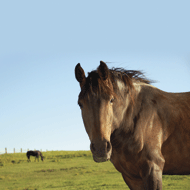
Scientists have created working nerve cells from horse stem cells for the first time.
A breakthrough in stem cell research could pave the way for new treatments for neurological conditions in horses. For the first time, Edinburgh scientists have succeeded in creating working nerve cells from horse stem cells.
Researchers from the Roslin Institute say the breakthrough could help horses suffering from neurological conditions such as equine grass sickness (EGS) and conditions similar to motor neurone disease in humans.
EGS affects about 600 horses in the UK each year, causing nerve damage throughout the body. No specific treatments are currently available and the disease is poorly understood. EGS in its most serious form is usually fatal.
Roslin scientists took skin cells from a young horse, turning them into stem cells using a technique developed for human cells. These cells were then used to create nerve cells in the laboratory.
The team tested the functionality of the cells in a test tube, proving they could transmit nerve signals.
Scientists say this discovery provides a powerful new tool for studying horse diseases and testing new drugs.
The study has been published in Stem Cells and Development. Author Dr Xavier Donadeu from the institute explained: "Stem cells hold huge therapeutic potential both for people and animals.
"Our research is an important step towards realising that potential for horses and provides an opportunity to validate stem-cell based therapies before clinical studies in humans."
Veterinary surgeons all over the world already use stem cell therapies to treat horses for different conditions. However, these therapies use adult stem cells, which are harder to maintain and more restricted in the types of cells they can become.
Mostly used to treat tendon ligament and joint problems, the efficacy of these therapies is not entirely proven.
The study is available online here http://online.liebertpub.com/doi/abs/10.1089/scd.2013.0565.


 Companies marketing medicines for small pets exempt from authorisation must submit their annual return to the Veterinary Medicines Directorate (VMD) by 30 November 2026.



