


Survey also finds many youngsters as old as 12 fail to recognise a turtle
School children as old as 12 are unable to identify a turtle while a fifth of seven year olds could not recognise a penguin, research has found.
Research, commissioned by the National SEA LIFE Centre in Birmingham, looked to find out what children’s knowledge of marine life is really like.
More than 500 UK children, aged between five and 12 were shown images of various sea life including a ray, turtle, otter, sea horse, octopus, jelly fish, penguin, clown fish, crab and star fish.
Boys’ performed slightly better than girls of the same age, and children in the Midlands, East Anglia, Scotland and Wales were the best performers, while those in Northern Ireland, the North East and London gave the most wrong answers.
Almost all of the children correctly identified the star fish and the sea horse, but when it came to identifying the octopus and jelly fish, almost a third of eight-year-olds wrongly naming the octopus, and more than a quarter of nine-year-olds believed a jelly fish was called a glow fish.
Nearly half of seven to nine-year-olds were unable to recognise a ray, with some thinking it was a shark, and 20 per cent could not distinguish between a green sea turtle and a tortoise.
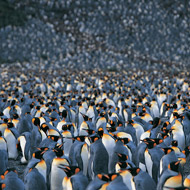
Many children struggled to identify a penguin, with a fifth of seven-year-olds opting instead for a puffin or even a Pingu – the television penguin character .
TV characters influenced decisions again with almost half of five-year-olds identifying a clown fish, not by its correct name, but as Nemo, the Disney clownfish of Finding Nemo.
James Robson, curator at The National SEA LIFE Centre in Birmingham, said: “The results of the survey are really interesting – and very surprising.
"We chose to use some of the most well-known animals at the centre in the survey and, while some aren’t straightforward to identify, we didn’t think others like the turtle or ray would cause so much confusion. It shows just how important the educational aspects of The National SEA LIFE Centre and other animal-focused attractions really are.
“Most shocking for me was some children being unable to identify a penguin when they’re so distinctive. But as our own penguins will be arriving here in April, hopefully it’ll help to educate as many children as possible.
"The Penguin Ice Adventure will allow us to educate the public about the species and highlight our efforts to breed, rescue and protect these incredible birds.”
The centre is due to welcome a colony of Gentoo penguins at Easter. They are the fastest underwater swimmers of the penguin species, reaching speeds of up to 36kph.


 Companies marketing medicines for small pets exempt from authorisation must submit their annual return to the Veterinary Medicines Directorate (VMD) by 30 November 2026.



