


Gabon to use techniques by Edinburgh scientists
A new drive to reduce elephant poaching in Gabon will make use of forensic DNA techniques from UK scientists.
The ambitious project will be unveiled by Gabonese president Ali Bongo Odimba this week as he attends the UK Government's Illegal Wildlife Trade Conference in London.
The initiative has evolved from a collaboration between the National Parks Agency of Gabon and genetic and forensic experts from the Royal Zoological Society of Scotland (RZSS) and TRACE Wildlife Forensic Network.
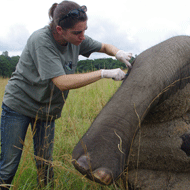
Bone and tissue fragments will be recovered from elephants that have been killed by poachers and forensic DNA techniques will be used to create unique profiles to compare to blood-stained clothing or ivory recovered locally in Asia.
Dr Rob Ogden, director of conservation science at RZSS, said the project "bridges the gap between conservation genetics and wildlife DNA forensics."
He explained: "We routinely use wildlife genetic analysis to provide information for conservation management, but the same DNA tools and data can be transferred into forensic investigations to support wildlife law enforcement."
According to RZSS, statistics show an average of 96 elephants were killed every day in 2012, while large scale ivory movements in 2013 were 20 per cent higher than the previous peak in 2011.
“The elephants in Gabon are extremely susceptible to poaching activities as they live in forests rather than savannah and are therefore more difficult to monitor and protect,” said Professor Lee White, director of Gabon's National Parks.
“The geographical proximity of Gabon, in central Africa, to more lawless states offers poachers easy access and retreat with their contraband.”
Senior government representatives from more than 50 countries are attending this week's conference, with the aim of driving action to address the threats to endangered wildlife. His Royal Highness the Prince of Wales will also be in attendance, along with David Cameron, who is hosting the event.
Image courtesy of RZSS


 Companies marketing medicines for small pets exempt from authorisation must submit their annual return to the Veterinary Medicines Directorate (VMD) by 30 November 2026.



