


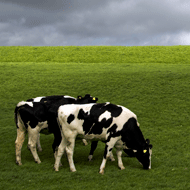
Animal tests positive for rare form of disease
German health officials have reported the country's first case of bovine spongiform encephalopathy (BSE), also known as "mad cow disease", since 2009.
According to an alert to the World Organisation for Animal Health (OIE), investigations were carried out after the disease was identified in a 10-year-old cow at slaughter.
Testing at the National Reference Laboratory (Friedrich-Loeffler Institute) confirmed a very rare form of the disease known as atypical BSE (L-type) on January 9. This form of BSE is not generally associated with animals consuming infected feed.
Health officials say the animal never entered the food chain and the carcass has been destroyed, meaning the case did not pose a threat to human health at any stage.
Seven offspring cattle were identified during the epidemiological investigation. Of these, five had already been slaughtered and the two which remained on the farm of origin have now been killed, tested for BSE and the carcasses destroyed.
A further five bovines were found to have been born on the farm between one year before and one year after the birth of the affected cow. These five have also subsequently been slaughtered, tested and destroyed.
All carcasses tested negative for BSE and authorities in Brandenburg, Germany, declared on January 16 that no other animals were affected.


 Companies marketing medicines for small pets exempt from authorisation must submit their annual return to the Veterinary Medicines Directorate (VMD) by 30 November 2026.



