


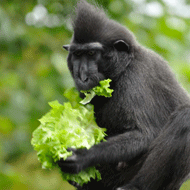
Fruit believed to cause health problems in primates
Monkeys at Paignton Zoo in Devon have been forced to kick their habit of eating bananas, as it emerges that fruit grown for humans can lead to health problems in primates.
According to zoo experts, fruit cultivated for humans is higher in sugar and lower in protein and fibre than wild fruits, and giving this to animals is the equivalent of giving them cake and chocolate.
Monkeys at the zoo are now only given a banana if they are unwell and in need of medication.
Dr Amy Plowman, head of conservation and advocacy, explained: "Compared to the food they would eat in the wild, bananas are much more energy dense - they have lots of calories - and contain much more sugar that's bad for their teeth and can lead to diabetes and similar conditions.
"It can also cause gastrointestinal problems as their stomachs are mostly adapted to eating fibrous foods with very low digestibility."
Zoo keepers say they are already seeing positive outcomes as a result of the fruit-free diet. Senior head keeper of mammals, Matthew Webb, said: "We have noticed an improvement in the condition of primate coats - in particular the colour and thickness of the fur of the Sulawesi crested black macaques."
The transition is even said to be reducing aggression levels in some animals. Matthew continued: "Smaller monkeys such as tamarins and marmosets are highly strung animals and live in tight-knit social groups which can be quite aggressive at times.
"Reducing the sugar in their diets has calmed them down and made their groups more settled."
Monkey diets at the zoo now include lots of leafy green vegetables and as many leafy branches as possible, particularly for leaf-eating monkeys. Dr Plowman says "Leafy green veg is great because it is high in protein, fibre and contains lots of vitamins and minerals."
A specialist pellet feed ensures the animals receive the correct level of nutrients and brown rice can also be scattered around the enclosure to encourage foraging behaviour.
The amount of starchy root vegetables fed to the primates has been reduced as it can be high in sugar and other readily-digestible carbohydrates, according to Dr Plowman.
When asked how the animals are adapting to their healthier diet, Dr Plowman said they had been weaned off the bananas over a long period of time and had not shown any difficulty adjusting.
Image courtesy of Paignton Zoo.


 Companies marketing medicines for small pets exempt from authorisation must submit their annual return to the Veterinary Medicines Directorate (VMD) by 30 November 2026.



